Thursday, September 11, 2008

The confusing world of lamb, mutton, sheep and goat


I used to dislike roast lamb due to bad experience. Many years ago, I was staying at this residential college while on an exchange programme in Melbourne Uni, and on days when roast lamb was on the menu, I'd switch to a vegetarian diet. It was simply too strong and smelly, I had decided.

But give me Soup Kambing and I'll slurped it till it's finished. Nope, I'm not put off by the stronger taste of mutton.

So me and Remi would have disagreements over the difference between lamb and mutton (when we're away from the computer of course, otherwise we would verify instantly), and I used to think that mutton comes from goat and lamb comes from sheep.

Here's the answer from about.com:
"Lamb is a sheep less than a year old, typically slaughtered between the ages of four and twelve months. Older sheep is called mutton and has a much stronger flavor and tougher meat that many find distasteful."

So I was wrong, but then, in the world of mutton dishes in Indian and/or Malay cooking, it seems that goat meat is used interchangeably with sheep meat, according to an entry in wikepedia. I may be right too.

Anyway, sheep or goat, when it comes to cheese, I dislike it all the same. But when it comes to eating the meat, I've converted and now enjoy lamb almost as much as I do with other types of meat.

Last night was my first attempt at roasting some unidentifiable cuts of lamb we bought at the Sunday market. As usual, I can't find any recipes that uses that part of lamb, and which I have all the ingredients. So, the below recipe is an improvisation from a stuffed lamb leg recipe from Jamie's Italy.

Lamb roasted with herbs
serves 2

6 small pieces of lamb
about 6 cloves of garlic
mixed herbs (parsley, oregano, thyme - recipes always recommend fresh herb, but I only had dried ones)
1-2 anchovy fillet
2-3 tbsp fresh breadcrumbs (yes, I crumbed my own bread with my hands)
1 tsp pinenuts (they are not cheap, so I use sparingly)
sea salt and ground black pepper
rosemary
2 bay leaves
olive oil
1-2 potatoes (I used 1 cos I only had 1)
fresh mushrooms (portobello is nice whole, but if using button mushrooms, sliced them in chunky pieces)
red wine

Preheat oven at 200C.

Chopped half the garlic and the anchovy fillet up finely. Combine with breadcrumbs, mixed herbs, pinenuts, salt and pepper. Add a little olive oil and rub on the lamb pieces. Season with more salt and pepper if you think it's not enough.

Slice potatoes and lay them in a roasting tin, with the mushrooms, bay leaves and remaining garlic over it. Sprinkle with rosemary, olive oil, salt and pepper. Put the roast lamb on top.

Roast the lamb for about 1 hour (or until cooked). After about half an hour, baste the lamb with some red wine over the meat. Can continue doing this every 15 minutes until lamb is cooked.

Serve with simple greens like boiled french beans (because trust me, the meat is very oily).


Afternote:
1. Cooking time may be reduced, and having the lamb covered for the first half hour may be useful in achieving juicier meat.
2. Can also serve with pasta tossed with a dash of olive oil.
3. The part of lamb used in this recipe is loin

Wednesday, September 10, 2008

Thoughts from Lasagne


I recently came across a quote saying "if you can organise your kitchen, you can organise your life". It reminds me of my late mother, who not only singlehandedly managed her kitchen to feed many mouths EVERYDAY (no weekend breaks), but also gave comfortable lives to her children.

She worked her kitchen with ferocious efficiency. On the rare occasions when I have to break into the kitchen to prepare for my Food and Nutrition practical tests, she would gladly dish me plenty of advice, but also chide me for my habit of using too many utensils, leaving a big pile of washing at the end. To her (and also to my domestic helper Indar), the chore of everyday cooking can be lighten by efficient cooking, which involved using just 1 wok and 1 pan for 3-4 dishes, and constant washing along the way, so that you don't get the pain of having a huge pile of washing at the end. After all, a dishwasher is not a luxury we have.
So when I was attempting this Lasagne recipe from Jamie's Italy, I wasn't comfortable with its use of 4 pans. Too technical for someone like me, who is still struggling with keeping my kitchen neat while cooking. And I don't own so many pans.

I altered the recipe slightly, using ready made pasta and replacing roasted shredded meat with minced beef. Not sure what went wrong, but the sauce was too juicy the first night we ate it. When we had the remaining half for lunch the next day, it was just perfect.

Lasagne alla minced beef
serves 2-3

Lasagne
Parmesan cheese for grating
mozzarella cheese (according to taste, I personally prefer my pasta to be not overly cheesy)
a handful of fresh sage leaves, if available
olive oil

for tomato sauce:
150-200g minced beef
olive oil
2 cloves garlic, sliced
rosemary
2 bay leaves
1 tin plum tomatoes

for white sauce:
300 ml milk
sprig of parsley
pinch of nutmeg
1/2 onion, sliced
2 black peppercorns (I used white ones)
30g butter
20g plain flour (quantity estimation, as I've divided the original quantity by 3)
Parmesan cheese, freshly grated
sea salt and ground black pepper


Heat a pan and add some oil. Fry garlic until lightly coloured, add the minced beef. When it's more or less cooked, add the rosemary, bay leaves and tomatoes. Cook gently for 45 minutes with a lid on.

When the tomatoes are nearly done, put milk, parsley, nutmeg, onion and black peppercorns into another pan and bring gently to boil.

Melt the butter in a 3rd pan and add the flour. Mix well, then strain the milk and add slowly, stirring well until you have a thick smooth white sauce. Bring to boil and simmer for a couple of minutes, then take off heat and add Parmesan. (adjust consistency with milk or flour if necessary)

Preheat oven to 180C and butter a baking dish.

Bring a pot of salted water to boil, add some oil, blanch the dry lasagne stripes 2-3 at a time until they are relatively cooked, then cover bottom of dish with the pasta. Top with some tomato meat sauce, then some white sauce followed by Parmesan. Repeat layers until tomato meat sauce is finished. Top with white sauce, sprinkle more Parmesan and scatter mozzarella and sage leaves over. Drizzle with olive oil. Bake for 45 minutes until golden.

So we had our dinner past 8.30pm again. It was good, but being a slow cook, I will do it only if I have more time.

Sunday, September 07, 2008

Sunday market


Sunday market beside Te Papa Museum. Our first visit, and likely to become a weekly affair, where we can get fresh produce direct from the farmers at a cheaper price than at the supermarkets.

Interestingly, the majority of the farmers here are Chinese (don't know which generation, but they speak Cantonese on top of very good English). We were told they are commercial growers from Palmerston North, not your backyard gardeners. It's almost like a Chinese market, where you can find youtiao and douhua, and we got pork buns and chee cheong fan for lunch here too :)

First attempt at porridge


No, we do not eat tarts everyday.

And yes, we cook Chinese food regularly, except that when it comes to Chinese cooking, instinct took over step-by-step recipes. Like simple stir frys based on memory of mom or maid's cooking. Or throwing whatever vegetables and meat we can find in our fridge into soup for noodles, or rice cooker for an all-in-one pot of flavoured rice (black bean sauce, I discovered, works pretty well, same for chicken stock with garlic and ginger for chicken rice. No more spending money on those ready claypot rice mix).

We love porridge, but never attempted them, believing that it takes hours to achieve that smooth, tasty consistency. But we have to start sometime, especially when faced with an almost empty fridge just before our weekly grocery shopping on a lazy Saturday late morning.

My cookbook "Porridge for Lazy People", bought in Xiamen, came in handy. The proportion of rice to water is about 100g rice to about 7 cups water. Add in some frozen prawns, canned and dried mushrooms, chicken stock, soya sauce, simmer for about 40 minutes (according to the recipe, we are supposed to boil violently in high fire the rice and water before starting the simmering process) and voilah! A tasty porridge, just enough for two for a Saturday brunch.

Friday, September 05, 2008

It's Lemon tart now


After the orgy of olive oil, let's move on to butter!

This was freshly done last night, and we made 4 doughs at one go, plus the butter necessary for the lemon filling, we used up 350g of butter. Good that the kiwis sell their butter in 500g block here.

There are 2 different types of tart base in Remi's world of French cooking -- Pâte brisée for savoury dishes, which is also used in the classic French Apple Tart; and Pâte sucrée, which is sweet and has a more buttery/crumbly texture and is used in Strawberry Tart and the like.

We can't agree which tart base we should use for our lemon tart this time (as we have made this many times, and our notes didn't precisely specify and we may have tried both). So we agree to disagree by concluding that both work well, and we used Pâte brisée for yesterday's Lemon Tart, so that we can keep the remaining doughs for our next quiche.

And a word on the lemons we used: it came from our friends B&Z's garden. According to B, a lemon tree bears more than 2000 fruits a year. I want my own lemon tree!


Lemon Tart
1 dough
2 lemons (use 3 if your lemons are small or if you prefer a more tangy flavour) - for both its zest and juice
3 eggs
100g sugar
100g butter

Pre-cook dough in a preheated oven at 200C.

Melt down butter.

Mix melted butter, sugar and lemon juice and zest. Stir strongly together.

Pour on the cooked crust and bake at 200C for 15-20 minutes.

More tarts


Onion lovers: here's a wonderful main course of onions!

I know friends who do not like onions, garlic, parsley, olive, anchovy...the list goes on. But we love almost all kinds of food that comes with a strong taste, so if you have a chance to try out our cooking, it pays to let us know your dislikes. Otherwise, if you hate onions, there's no way you can remove the onions to the side of your plate in this dish

We found this Onion and Olive Tart on an Olive cookbook by Tess Mallos. Extremely oily, as you basically simmer the onions in extra virgin olive oil. hmmmm....makes it so soft and juicy (and of course fat). And the leftover tart keeps well overnight and taste just as good (or even better) for our lunch the next day. I've halved the original quantity so that it feeds about 2-3 persons.

Onion and Olive Tart
Anchovy (optional, enough to spread around your tart - thankfully for us, anchovy is surprisingly more affordable in NZ)
4-5 pitted black olives, halved
1/2 tbsp extra virgin olive oil

Topping
3-4 onions, thinly sliced
30ml olive oil (it's very sinful, so adjust according to your conscience)
1/2 bay leaf (we didn't have bay leaf first time we cook this, works well)
2 cloves garlic
chopped thyme
chopped rosemary
salt and black pepper to taste

1 tart base as in previous post


Make the pastry base first.

To make the topping, combine the onion slices, oil and bay leaf in a wide saucepan. Cover and cook over low heat for 20-30 minutes, stirring occasionally until the onions are soft but not browned. Add all other ingredients and cook uncovered over slightly increased heat for about 10 minutes until moisture has evaporated. Remove from heat and discard bay leave and cool.

Preheat oven at 200C. Cook tart base for about 15 minutes. Reduced heat to 180C.

Spread the cooled topping over cooked tart base. Top with anchovy and olive halves in a fancy pattern if you like. Brush with (more) oil and return to bake for 25 minutes until cooked.

Picture above shows the tart in pre-cooked state, so don't be afraid to brown the onions a bit.

Wednesday, September 03, 2008

Of tarts and quiches


These are typically French quick and easy dishes. Not the type of Haute elaborate fine cuisine you find in those super expensive restaurant, where the plates are much larger than the food within. But rather, what you would typically find in a French mom's oven.

To speed up our infamously slow cooking process, we are now used to making 2-4 tart bases at one go, and freeze the remaining ones. So anytime we feel like having a tart or quiche, the base is already done. Just need to defreeze for 1 hour and roll it out. Voilah!

Basic Dough (Pâte brisée)
250g plain flour
125g unsalted butter
pinch of salt
80ml water

Preheat oven at 180C.

Mix flour and butter using your fingertips. Add water slowly.

Knead gently into a dough, do not over knead.

Keep in fridge for 30 minutes.

Roll out thinly on a floured board (thin crust is nicer) and line on a prepared tart tin. Using a fork, poke holes around the base and cook the base for 15-20 minutes (or until cooked and lightly brown).

The above quantity is generally enough for two 20cm tarts. So we like to keep half of the dough for our next cooking.

What goes into the tart?

To get inspiration, check out supermarkets/cafes on what they have. That's what we did while grocery shopping. And you get your key ingredients ready at the same time.

Or, if you're a tomato lover like us, who always have a ready supply of tomatoes in your fridge, try the super easy and yummy Tomato Tart. Spread Dijon Mustard (not the English types, but those with a lot of visible seeds gives extra good taste). Cover with tomato slices. Spread more mustard over the tomatoes, sprinkle with cheese (optional) or basil leaves (optional) and bake for 20 minutes at 200C.


Quiche of Spinach + Onions + Feta

1/2 pack of fresh spinach
1 onion, diced
bacon (optional, quantity as much as you like)
Feta cheese (also according to taste)
1 tsp chopped parsley

2 eggs
80ml cream
150ml milk
salt and pepper

Fry onions with some olive oil. Add spinach and bacon and cook until spinach is wilted.

In a mixing bowl, beat eggs, milk and cream together. Add seasoning and cheese and the rest of ingredients.

Pour into the pre-cook tart base and bake at 200C for about 20 minutes or until the quiche is golden brown.

Tuesday, September 02, 2008

Accidental milo meringue


It is hard to miss spotting the decadent and yummy looking meringues in French bakeries. But my maiden French meringue experience didn't quite turn out well. It was 2003. Me and Gwen finally gave in to temptation and bought one meringue to share when we were backpacking in Southern France. It was verrrrry sweet, dry and hard, and still too sweet. We didn't finish our sugary sin.

So, when Rémi and I were left with 4 egg whites after making Crème Brûlée, meringue didn't come to the top of my mind. I searched through my favourite, fail-proof dessert cookbook by Christelle Le Ru but only her chocolate meringue recipe is willing to take in my four egg whites.

It's a choice between wasting the egg whites altogether or experimenting on a new recipe. To substitute for our lack of cocoa powder, we use our favourite milo. The result is a surprise treat -- soft and chewy, with the distinctive malted chocolate flavour that we so love. It can be enjoyed on its own, or broken into small pieces and indulged with plain yoghurt.

Milo meringues
4 egg whites
pinch of salt
230g white sugar
2 big spoons of milo powder
1 teaspoon cornflour

Preheat oven to 180C.

Beat the egg whites and pinch of salt into soft peaks. Add the sugar slowly until the mixture is shiny and glossy. Fold in the milo and cornflour.

Spoon the mixture onto greased baking trays. Leave sufficient space for the mixture to expand.

Bake for 5 minutes. After which turn off the oven but continue leaving it in the oven for 30 more minutes.

The original recipe indicated a quantity of 25 meringues, it filled up 3 trays when we made it.

* recipe adapted from Christelle Le Ru's Simply Irresistible French Desserts.

The dummy guide to polite French

I can't say I can speak French (at all). Having a French husband doesn't mean you get a free French language teacher, not especially if he is more familiar with python and c++ language.

While it is my long term goal to master this beautiful language, I am far from being able to converse in it, having only taken lessons for a mere 5 months couple of years ago.

But in case you're planning on a French holiday, it's fast to pick up a few quick French favourite phrases, that will sure boost your image in front of your French hosts.

The usuals:
bonjour - good day
salut - similar to good day, common when you do the cheek to cheek kiss
merci beaucoup (pronounced bu-koo) - thank you
au revoir (pronounced or-voir) - goodbye
bon nuit - good night

The 'extras' to impress:
c'est bon - it's good: said especially after taking the first bite of any food you're trying. If it's not good, you don't say so, but anything else, even if it is just ordinarily nice, say it's good. It'll make your French host very happy. French are optimistic lot and like to give good comments to most things. So why not go with the flow.

c'est magnifique - it's magnificent: if good is not good enough, make it magnificent!

tres bien - very good: again, everything is very good.

c'est jolie - it's beautiful.

How do we say "bad", "ugly", "lousy"...in French? I'm afraid I do not know at all and do not need to know. The above are useful enough in striking a friendly and polite image in a French household.

Thursday, January 03, 2008

The search for the picture perfect Hakka earth buildings


Hakka earth buildings (tulou), originally uploaded by fangie2000.

These fortresses built by the early Hakka settlers in Fujian was to be the main highlight of my southern China trip. So I was adamant in getting to the right ones - pretty, rustic ones set in the mountains, without the bus loads of tourists and souvenir shops taking over the earth buildings of the village folks.

Lonely Planet China proved to be an unsuitable guide to my quest, being sketchy on how to get there. And contrary to it, frequent buses do run to many of the villages where you can find these buildings, termed tulou in Mandarin.

The best source of information on backpacking in China is actually the travel forums of the Chinese people, the prerequisite being able to read Chinese. And I found my answer in baidu.com's equivalent of Yahoo! Answers.

With the benefit of hindsight, and advice from my Xiamen friends, a good jumping point to the villages would by the county of Nanjing (南靖, 2 hours and less than 30RMB by bus from Xiamen), where bus connections to the villages, less than 2 hours journey and costing about 20RMB, could be found.

I based myself in this village called Taxia (塔下), staying in a well-maintained, clean and beautiful earth building guesthouse called Weiqunlou Kezhan (literally meaning Apron Building Guesthouse, wqlkz.com). Having heard about how bad sanitation could be in the villages, this condition of this guesthouse was well beyond my expectation and at a reasonable price (120RMB for 2). The shared common bathrooms are clean with hot showers, bedroom is big and comfortable with quilt blankets to keep out the cold during winter. The owner of the building is a retired teacher from the village, while the guesthouse is maintained by his younger son, a village teacher. Both are very friendly and help to arrange for tours to nearby villages at honest price. Meals there are a little bit pricey though.

The small village of Taxia itself is very dainty, with a stream running through it. There are several round/square/rectangular earth buildings in the village, and a quiet temple on the hill slope.

From this village, we hire a motobike at 120RMB for a day, with the driver bringing us to visit 4 equally beautiful villages nearby. Not to be missed is Tianluokeng (田螺坑, pictured above), which is tiny village set among the paddy fields (but avoid taking meals there, our driver told us the restaurants there are notorious for charging tourists exorbitant prices).

Another pretty and rather unspoilt village is Hekeng (河坑), about 5km from Taxia. It features more earth buildings set in seven star constellation position.

How to find the right bus connections? The easiest way is to decide on the guesthouse you're staying, and call them for the bus schedule. That's what I did, as they have all the bus schedules to their village at the back of their mind, and even help to ask the bus driver to reserve better seats for us (otherwise, we may have to end up sitting on stools placed on floorboard if all the seats are taken). If you miss the direct bus connections, it is possible to take the next bus to another village and transfer to your destination on motorbike. The village roads are not busy and so pretty safe.

The main barrier to all these is language, as many do not speak or understand English.

Monday, December 31, 2007

Experiencing brown China


Hakka earth buildings (tulou), originally uploaded by fangie2000.

My Singaporean friend, who became a farmer in rural China termed the countryside "brown China". It's definitely not the typical postcard pretty Chinese gardens, pagodas, temples and palaces. But it is a realistic snapshot of middle China, the lives of the average peasant working in the fields and living in villages.

Tuesday, November 13, 2007

Bako National Park


Bako National Park, originally uploaded by fangie2000.

Fabulous view of Gunung Satubong against the sea from the viewpoint of Limtang trail at Bako National Park. It's absolutely rewarding after a long and tiring hike to be here.

Wildlife watching


Kuching, originally uploaded by fangie2000.

One of the highlights of Sarawak is its jungle, and the National Parks around Kuching didn't disappoint us in terms of wildlife, whether it is the semi-wild orang utans in Semenggoh Orang Utan Sanctuary (the orang utans here roam freely in the jungle to look for their own food, but if they are free to come and go in the sanctuary at fixed times for food) or the proboscis monkeys in Bako, or even the tiny leeches, ants, creepy crawlies, snails, butterflies or snakes...along the jungle trails.

Journey of a leech


Imagine a jungle floor full of leeches? Imagine having to stop every five minutes for "leech check"? That's what happened during a jungle trek at Kubah National Park in Sarawak, the day after a heavy rainstorm. It's a yucky experience not to be forgotten. Watch how a leech moves, it's amazing. This leech was caught and removed from my hiking shoes. Phew...thankfully, it didn't manage to make its way to my blood.

Saturday, August 11, 2007

Bordeaux


Bordeaux, originally uploaded by fangie2000.

Just back from another trip, this time Southwest France :)

Friday, July 27, 2007

Camping in Ko Adang

I have never been an enthusiastic camper, much preferring the comfort of an en suite toilet in a chalet or hotel room.

So it came as a surprise to myself that I had actually enjoyed camping in Adang more than sleeping in the chalet in Lipeh or even Tarutao.

As the ranger station is the only chalet operator in Adang and Tarutao, advance reservation is necessary in order to secure a room. We were lucky to get a room in Tarutao when we arrived. But Adang's chalet was fully booked.

The camping ground in Adang is very pleasant, under the shade of casuarina trees, right beside the white sandy beach. Corals and fishes are relatively plentiful along part of the long stretch of beach. So you are practically almost jumping off from your tent to the corals without having to hire any boat. During sunset and sunrise, you can also admire the flaming red or orange sky cast by the sun from the tent.

The camping area is very large, and campers are free to pitch their tent anywhere within the camping ground without having to stay too close to other campers. Unfortunately, our tent turned out to be a crappy one when it started raining during the 2nd night, as rain water leaked through. That was the end of our camping.

But after spending one unsatisfactory night in a chalet at nearby Lipeh, we found ourselves back to the camping ground in Adang. Except that we opted for a more luxurious tent set in a coconut hut that comes with thin mattresses and light bulb. And the beautiful beach is just right in front, a few steps away. Five star camping, I would say.

Saturday, July 21, 2007

More on Tarutao-getting there and away

It's been a rather long time since I updated this little space. Have been on a few more trips since coming back from Tarutao, from Ho Chi Minh City, Tioman to Pulau Aur. But I'll like to introduce more of Tarutao here.

Despite its relative obscurity, Tarutao is not difficult to get to, and is fast gaining popularity among European backpackers. From Hatyai, regular mini buses go to Pak Bara, the jumping off point to get to Tarutao. The bus boarding point is diagonally across the train station. Exact bus schedule can be enquired at the hotel you're staying at.

Beware though. Before we even reach the bus stop, we were approached by locals wanting to sell us bus and ferry tickets. We thought, why not. So were led to a travel agency round the corner. The travel agent tried to convince us to buy return trip tickets, including for ferry. In the end, we got our bus and ferry tickets at this first travel agent we saw (luckily not for return trip). It turn out that the travel agent option is not necessarily the cheapest and most flexible option.

Bus tickets could be bought directly at the bus stop, which is only about 20m from the travel agent (we thought it was much further away). Upon reaching Pak Bara, found that there are other ferry companies going to Tarutao at a better timing and price.

It would be good to not buy return ferry tickets too. For us, we went to Tarutao, didn't quite enjoy it as much as we want, so bought ferry tickets to bring us to Adang from there. Took longtail boat to Lipeh, didn't like it there, so went back to Adang. There was a couple we met at Tarutao, saw them at Adang a few days later, and was told that they didn''t enjoy Adang and were planning to go back to Tarutao.

The bottomline is, these little islands each have their own characteristics, suited to different tastes. So, don't bind yourself to only one of them with prepaid return ferry tickets. It's rather easy to buy tickets back to Pak Bara, either through the chalets or the park ranger.

Some of the longtail boatman can be dishonest too, though they are probably in the minority. Had an unpleasant encounter with one. Longtail boat between Adang and Lipeh is only about 50B. As there's no jetty at this 2 islands, the ferry from Tarutao drops passengers in between the 2 islands, for them to transfer via longtail boat. Always ask before getting onto the boat. As everyone was jostling to get onto the boats, we made the mistake of not confirming the price with the boatman. In the end, all the passengers on our boat were made to pay 100B each after the boat has left the ferry.

Despite the little hiccups, it was definitely worth the journey. Along the way, between Tarutao and Adang, the ferry even stopped at a charming little island for 20 minutes. It was almost a perfect beach, totally secluded with amazingly white sand and crystal clear water. hmmmm....I wouldn't mind going back to Tarutao soon.

Monday, March 12, 2007

Tarutao


It's not as well-known as even Ko Tao. Such that when friends asked me where I went, I always have to explain that it is in the far south, just a few kilometres north of Langkawi.

Because it's less troden by tourists, it is very tranquil and serene, with amazing secluded beaches that rank very high on my growing list of beautiful beaches.

The whole Tarutao National Park is made up of several islands, the main one being Tarutao itself, and Adang, where the only accommodation is operated by the national park office (which ensures that these two islands are not fallen to over development). The other island is Lipeh, which is directly opposite Ko Adang, and somewhat lies outside the national park boundary, and has the potential to be the next ko phi phi, with lots of chalets, restaurants, boats, foreigners and rubbish...
The rest of the islands in the area are mostly secluded and visited by day-trippers on snorkelling and diving trips.

Tarutao and Adang are very good places for a laid-back holiday. My favourite is Adang, such that I spend most of the week on this little island. Nice and quiet beach, with rather good corals and many fishes just off the shore. Friendly park rangers and serene environment. Well, nice place, but will probably go into more details next time.

The misunderstood French

This is a very common personal experience told by many Chinese tourists visiting France.
The same story, albeit experienced by different people, are always related to me, whenever I told them I: a) have a French bf; b) have travelled to France for holidays.

The story goes:
Mr A went to Paris (somehow, Singaporeans/Chinese perception of a French holiday is to go to Paris, never mind the fact that there are many more lovely places to visit in this country. The most romantic city plus buying the latest LV product at a cheaper price is enough reason to make the trip to France worthwhile).
Mr A got lost in the city, needed to ask some Frenchies for direction, or to ask some Frenchie train station officer for help.
Not knowing how to speak French, he asked for help in English.
The super proud and Anglo-hating French would pretend not to understand a word, or even ignore the question altogether.
The desparate Mr A, after several futile attempts in communication started to speak in Chinese, and voila! The Frenchie was suddenly enlightened, and began to render help to the poor tourist in English.

This same story was repeated to me, this time by a Malaysian Chinese I met at Ko Adang. According to his experience, he has to swear in Hokkien before the French train officer finally answered his questions in English.

Are the Frenchies really so haughty and in disdain of the English language?

I'm no French expert and have been to France only three times. And thankfully, I've not been in such a situation.

It's true that the French are no English speakers and don't like to speak English.

However, from my personal experience in interactingn with French, I would think the French do not like to speak English (even to English speaking tourists) not because they look down on the language, but because they can't speak it well and are too "pai seh" to admit it, and too embarassed to show their lack of command of the language.

And go out of Paris, and you'll find English-speaking French becoming rarer and rarer, especially among older generation.

So next time, if you meet a French who refuse to speak English, don't mark him as "hao lian" immediately.

Wednesday, March 07, 2007

Home in a shell


Hermit crabs always fascinate me greatly. I particularly enjoy seeing them suddenly "pretending dead" whenever they sense a human coming near them.

At Ko Rawi's white sand beach, hermit crabs are everywhere, in varying sizes and different kinds of beautiful shells. We couldn't resist photographing and filming them, though this must have make one of the most boring video.

Fun aside, these cute creatures belong to where they are, so please, if your paths ever cross with these crabs, do not bring them home.

Friday, March 02, 2007

My latest trip


My latest trip to Ko Tarutao National Park. In case you're wondering where this wonderful place is, it is a marine park in the far south of Thailand, just about 5km north of Langkawi.

The beaches there are simply marvellous - white powdery sand, crystal clear emerald sea, multitude of colourful fishes and marine life and serene and relaxing atmosphere. Hmmm...what a charming place.

Shall update with more details again.

Monday, January 08, 2007

Maiden ski experience

It's my first time, and I've fallen left, right, centre and back. Yes, I've fallen so many times, on so many different positions that I've quite lost count.

The first time I tried ski, R signed me straight up for a one-an-half hour instruction course. Teaching a complete beginner is differennt from knowing how to ski well. And it frees him up to go ski freely in the difficult slopes without having to handhold me. So why not.

After the brief introduction with my cute instructor, he immediately ask me to do a little glide down an extremely gentle slope. Actually, the slope is so gentle and short I'm not sure I could call it a slope at all. But I still panick when my ski sense the slightest difference in gradient and down I go.

The class was quite a torture. First, the ski boots and ski felt so clumsy on me, they really make my movement very uncomfortable. Yet, as a complete novice, instead of smoothly gliding down the snow, I was made to do quite a fair bit of "walking" up the gentlest of slopes. And of course, each time I'm supposed/expected to glide smoothly down, I tumbled down instead and have to a) wait for the poor man to pull me up; b) do the torturous climb up again. The constant bending of the knees is also a huge strain. However, being a complete kiasu Singaporean, I endured through the discomfort without any breaks, wanting to make the full use of my lesson.

However, it was only during my 2nd ski trip that I manage to ski on my own without help or handholding. After practising the whole morning, gliding down the slope holding R's hand, I miraculously managed to ski without help in the afternoon (for reasons I would rather not mention here). The feeling was great. Instead of taking half an hour to go down a short stretch of snow, it suddenly only took less than five minutes. You forget the fatigue and strain in your knees and want to go for more.

It helps to get used to falling on the snow. Probably like unicycling, when you know that it is actually safe to fall, you are more daring to go ahead without the fear of falling. And sometimes, after a terrible fall (as long as I don't break any bones), I quite like the feeling of lying on the soft snow, looking up into the sky.

Still consider myself a novice. Posture still not quite right yet. Need bigger guts to ski down steeper slopes. But I'm already looking forward to my next ski trip, which may be years from now :(

The fact that the scenery on top of the ski slopes is always breathtaking helps to whet my appetite to improve my skiing skills.

Saturday, January 06, 2007

White Christmas?


Yeah! I spent my Christmas in France. It's the first time in my life to experience Christmas during the winter season, like in the fairy tales. No more warm and rainy Singapore, no more street busking trying to sell balloons to the Christmas shopping crowd in Orchard. I had even spent Christmas once before in Melbourne - a true summer Christmas, bright, sunny and terribly hot.


The burning question from my friends is: so did you have a white Christmas? Much as the photos here suggest, the landscape was hardly white, due to unusually thin snow during this early winter. It did not snow at all and we had to go high into the mountains to enjoy the snowy landscape.


The countryside in the early morning was also surprisingly "frosty", giving a very nice feel of a white Christmas, but the ice shied away within hours from the warmth of the mid-day sun.

Sunday, December 17, 2006

Yogyakarta

Majestic volcanoes rising above the clouds on approaching Yogjarkarta, leaving me in awe of this land.

I had always resist holidays to Indonesia. The bad press in the Western media about Indonesia isn't helping the country's tourism industry.

So I had a pleasant surprise during my recent trip there. Friendly people, great food, beautiful country, fabulous shopping...


Mount Merapi, as seen from a viewpoint at a mountain pass. Looking at the ash and smoke puking from its crater, it really gives people reason to be fearful of it. Yet it's also awfully beautiful.


Borobudur...another wonder of Yogyakarta.

Sunday, November 05, 2006

Charming hotels in Penang

In Penang, try to stay in those old hotels that emits a rustic old world charm.
For those with a small wallet, like me, can consider Cathay Hotel. It was said that Michelle Yeoh recently shot a movie here.
The reception is manned by several friendly "uncles" who speak very good English, Mandarin, and of course Penang Hokkien. The rooms are clean and spacious. The few gripes I have with this place is, first, the wall is paper thin. Second, as I did not make any reservation and was lucky enough to still get the last room despite arriving close to midnight, I had the first room on ground floor from the main entrance. It means that you can hear all the sounds of people talking and walking in and out of the hotel early in the morning.

If you have lots of money to spare, then Cheong Fatt Tze Mansion is just right across the road from Cathay. Cost 10 times more, but expect more luxury. I missed the twice daily guided tour, so did not manage to visit the interior. But this architectually award-winning hotel should be worth the stay there.

Another luxury option is Eastern & Oriental Hotel, the Raffles Hotel equivalent of Penang, founded by the Sarkies brothers too. Looks good too.

Sunflower for the kitchen

No, I don't mean decorating the kitchen with a vase of the pretty flowers.

My constant search for a pretty sunflowers field brought me to a stop outside a village in Provence.

Each flower is HUGE, bigger than the size of my face. Not the prettiest sunflower, but looks nutritious. Can imagine the amount of oil you can extract from each flower?

Tuesday, October 31, 2006

The little red bug


This pretty little red bug features very prominently in my childhood memories.

One of our little joys as a kid was to catch insects, and the ladybird was one of the girls' favourites (while the boys liked to keep spiders for sparring purposes). On hindsight, now that I've grown old and wiser and more environment conscious, it's actually quite cruel to these tiny creatures.

Ladybird is also closely associated to my first library of English storybooks. At that time, we read about Cinderella, Jack and the beansprout and other fairy tales from the tiny, hardcover "Ladybird Classics".

These books also served as our toys, as we stacked them to become doll houses, or lined them up to become roads for our toy cars.

These are life's simple pleasures for simple kids with simple needs during those good, old and memorable days.

This is Singapore

What you see here is really Singapore.

Last Sunday, went on a trip down memory lane in Lim Chu Kang -- a place I spend my childhood. So it's not totally unfamiliar, as we drove around the place.

I turned into tour guide, pointing out to R: here's the widest road of Singapore in one of the remotest corner of Singapore; there's only few kinds of beings residing here: soldiers, farmers (or agropreneurs, as they call themselves nowadays) and "ghosts" (the largest cemeteries are found here too...remember one of my primary school classmates has to walk past the quiet cemetary roads to get home everyday); that's the site of my old school, here's (Thong Hoe) the Orchard Road of the kampong dwellers, where get our groceries, stationery, clothes, haircut etc done; there's the old market where we had our Sunday breakfast...


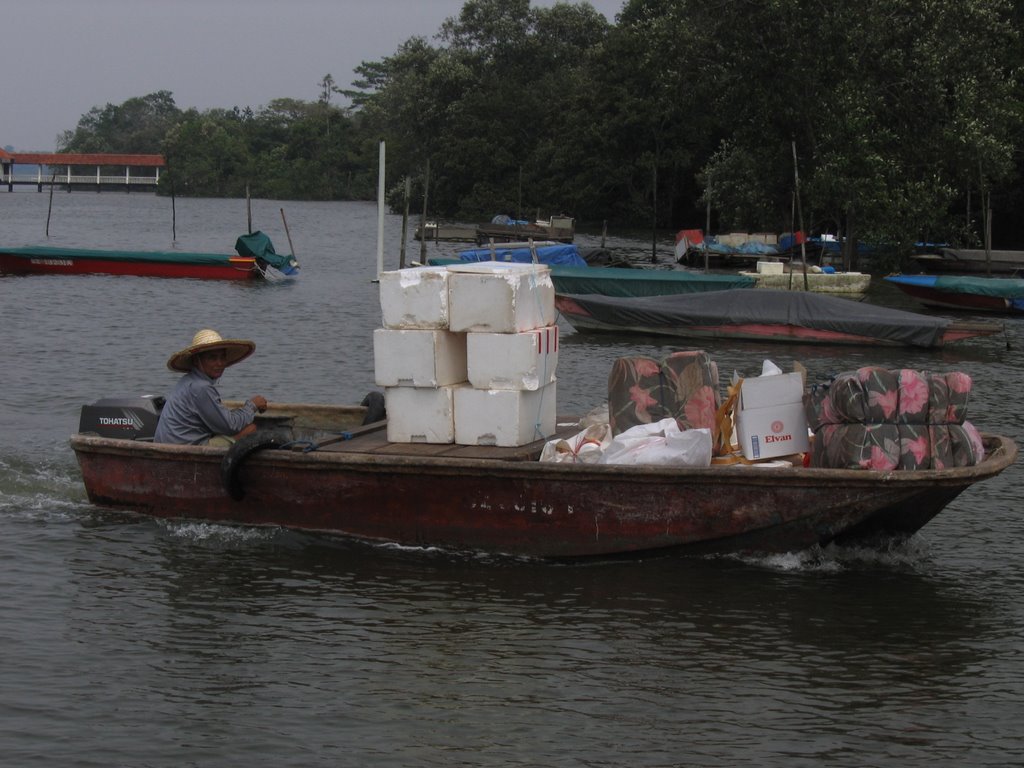
We also drove to the end of Lim Chu Kang Road, where we reach the sea and admire the floating village (I mean the kelongs) not far away.

After which we went farm hoping, from tropical fish farm (Singapore is one of the largest exporter of ornamental fish in the world), veggie farm, goat farm etc.


Did not manage to find the site of my old house during this trip. Will consider searching again next time, probably with the help of my sister or father.

Tuesday, August 29, 2006

Sunset in Corsica


Corsica
Originally uploaded by fangie2000.

Sunsets in Corsica are always a pleasure to the senses.

Saturday, August 26, 2006

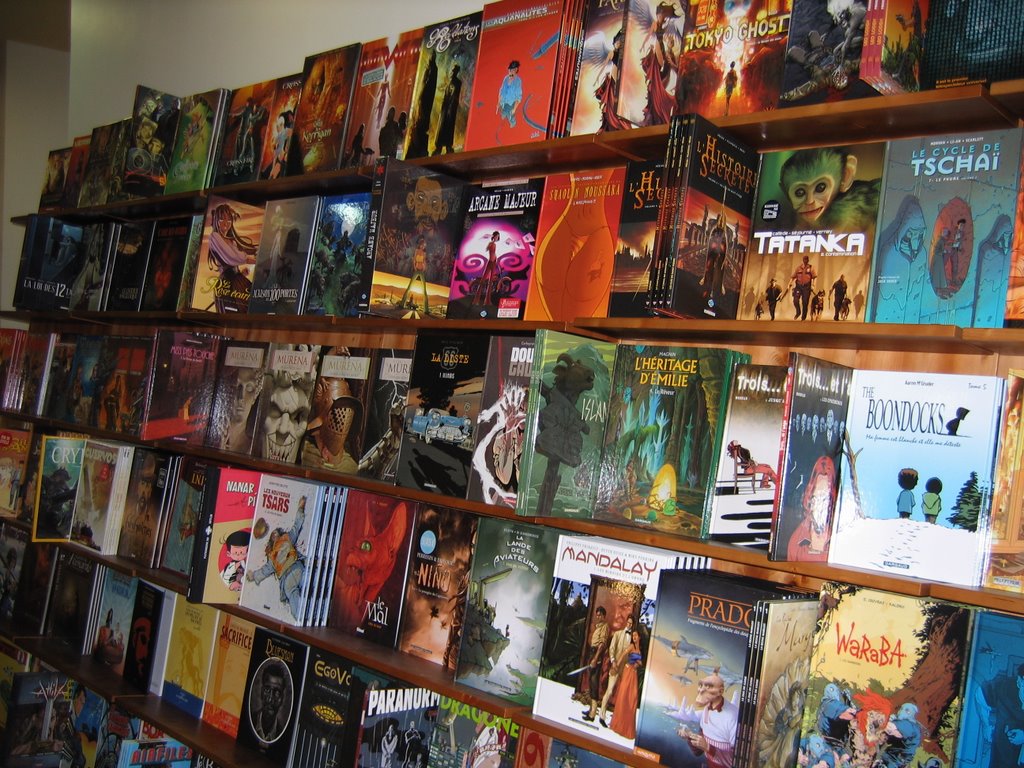
Bande Dessinée - French manga

Unknown to me for a long time, French not only loves Japanese manga, but are avid comic readers. In fact, France has a thriving comic industry, that I wouldn't be too surprise if they give the Japanese and US comic industry a run for their money.

Bande Dessinée is comic book in French. Unlike Japanese manga, they come in hard cover and A4 size, fully coloured. Price wise, they're definitely more expensive, each issue costing over 10 euros. However, unlike manga, they don't seem to run into ten over issues.


Step into a French comic shop and you'll be spoilt for choice. There is a comprehensive selection of creators, styles and genres, so much so that beginners would have difficulty in finding where to start.

The biggest problem perhaps is the language barrier. Most French comics are not translated into English and it's hard to find English editions, unfortunately. Maybe that's why many comic fans are unfamiliar with French comic. The most familiar French comic series to the English world could possibly be Asterix. Tin Tin is in French, albeit originating from neighbouring Belgium, which has a pretty robust comic industry as well, or so I heard.

So, it's a pity I'm still a far way to mastering French beyond bonjour and merci to enable me to read their comics.

Wednesday, August 23, 2006

Hiking for real

I've been an experienced "hiker" of concrete jungles, with real stamina for indulging in every female Singaporean's favourite pastime of shopping. Alas, the training I've received at Orchard Road is way insufficient in preparing me for my first hike with my bf's family.

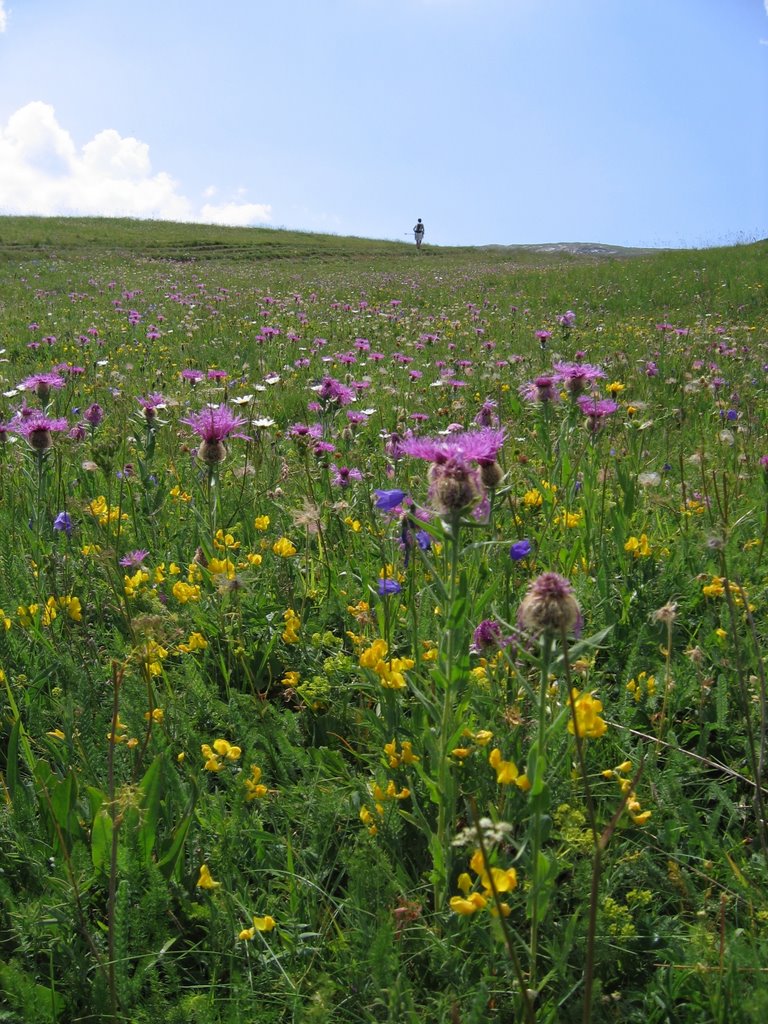
It was an introductory hike for me, so it was expected to be easy. The plan was to hike at a plateau beside "La Meije", one of the highest mountain in the Rhone Alps. The idea was, after reaching the peak of the plateau (which is not very high by French standard), the road will be pretty flat and we will reach a lake. The whole adventure would last only around 3-4 hours.


The choice of hike is perfect, with a wonderful scenery to die for, which I almost did (in a way).

The reality: within short while, I was already having difficulty keeping with the rest of the group (which includes 1 grandmother and another young lady, both with an injured foot). :-P


Difficult it may be, all the sweat and pain has not gone to waste. La Meije is so beautiful that I couldn't resist taking photos after photos of it.

Tuesday, August 22, 2006

The day I jumped off the cliff


I don't mean suicide of course. Life is too beautiful to end it prematurely, especially when I'm enjoying almost every minute of it (especially when I'm on holidays).

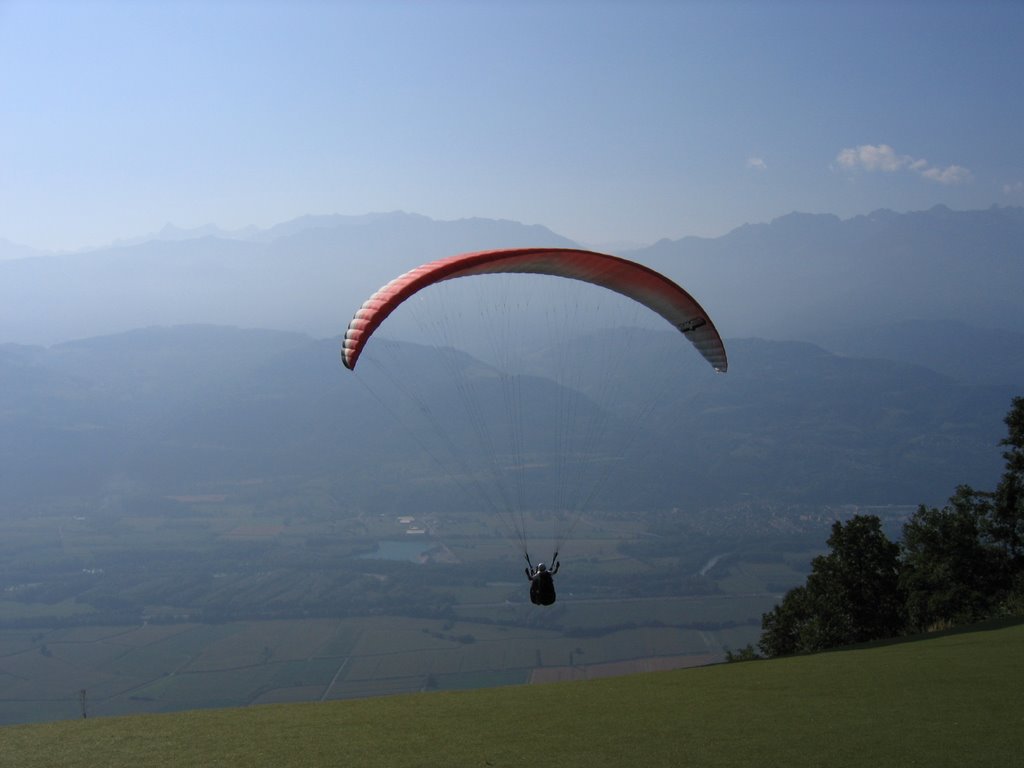
Well, I've made up my mind to jump from the cliff, literally, before going to France. Since I'm planning a visit to the Alps, and a country full of paragliders, tandem paragliding would be a good, easy and relaxing way to enjoy the mountain scenery.

Truth is, the height does freak me out initially. But there's always a first time and I've always harbour a secret desire to jump off a helicopter next by trying sky diving. So the plan is fixed and there's no turning back.

Standing at the edge of the cliff where I'm about to jump does make legs feel wobbly at first. It's no joke, considering that it's a steep drop of probably a thousand metres high.

The instructor was reassuring, telling me that I do not even have to sprint to catch the wind. True enough, after "walking" a few steps with him, we were lifted onto the sky within seconds, before reaching the edge of the cliff. Soon enough, my feet were already running in the air and I was comfortably seated in the parapente, securely strapped to the instructor. The village and valley came in full view underneath me, while we glide effortlessly along the cliff of the mountain for close to half an hour, aided by the stream of ascending wind blowing against the mountain edge.

"Wow, you've really got the most wonderful job", I exclaimed to my instructor, who couldn't agree less. Putting all fears of height behind me, I was soon busy clicking my camera away, totally awed by the thrill of being in the air.


The last few minutes of my flight adventure was to give me further new sensations when my instructor decided to let me experience freestyle paragliding. Without any warning, the world was suddenly spinning at full speed around me. Thankfully, the spinning didn't last long (but the effects of it did not wear off immediately).

Hmmm...I wouldn't mind taking up paragliding lessons next time.

Friday, July 21, 2006

Taking a French break

After going down memory lane, trying to refresh my memories of past fantastic holidays, I'm finally off for another big break! Tonight!

Hopefully, I'll be able to update my latest travel tidbits, rather than writing about trips that were already taken months ago :-)

Au revoir!

Not just concrete jungle

Of course, Tokyo is a sprawling metropolis with all its steel structures, latest gadgets, fashionable shops and modern conveniences, waiting to sweep you off your feet the moment you arrive.

However, it would do nature injustice if you neglect to make at least a day trip to one of the wonderful nature reserve surrounding the outskirts of Tokyo.

I'm glad I made the effort to go hiking to Mitake mountain, even though no one else was interested to tag along.

Despite being only 1 to 2 hours train ride away, you seem to be transported to an entirely different place -- peace and quiet, so quiet you can hear the rustles of the leaves, the flow of the stream and your own heartbeat. Being in the deep of summer, the leaves are so green that I can almost feel the dew are going to ooze out.

There's no need to rush, everytthing would be at your own pace. People there are also very friendly, ready to help you even if they can't speak your language. Japan is known for its greying population, and in the mountains, you feel that the elderly are ageing with grace and vigour. I was told that it's common for them to go hiking in the mountains for a couple of hours, sometimes even everyday. So don't be surprised if you see some elderly couple overtaking you.

People watching in Tokyo

Harajuku always come to everyone's mind if you want to do some people watching. No, not because of the super pretty/handsome Japanese artistes hang out there. Harajuku is good for people watching on a Sunday because of the punks in all sorts of unimaginable dressing/hairstyle that hang around there. And mind you, this place is super crowded (just like any other place in Tokyo actually) with teenages.


I would like to suggest another kind of people watching, which is to go to Meiji shrine. It's interesting because on Sundays (or probably just about any weekends), you'll likely be able to catch a traditional wedding procession. There, you'll be able to see Japanese couple deck out in their gorgeous wedding kimono with their family members (equally gorgeously dressed up), walking across the shrine courtyard. Everyone looks super serious, while hordes of tourists (me included) will be busy and happily snapping photos of them. Not exactly the kind of wedding I particular fancy, but it's fun to watch. I manage to catch two such wedding procession in the morning that I was there, while my friend Ying witnessed five in one morning, one of which has a very huge entourage of family members.

Another type of people watching was suggested by another friend Kul. Just go to the infamous Yasukuni shrine on a Sunday as well and you may be able to see protests by Chinese/Koreans protesters, complete with their banners, head bands and loud hailers.

Tuesday, July 04, 2006

When Monster Inc. meets Totoro

Imagine what happens when a Miyazaki fan got the chance to not just visit the famous Ghibli Museum, but Studio Ghibli itself?

Well, I almost went crazy (but not with my camera as photos are not allowed at most times)

My lucky break was during my Japan trip last June. Totoros of all sizes were almost everywhere the moment we stepped into Studio Ghibli: greeting us near the entrance, at the foot of the stairs leading to the meeting room, in the meeting room itself, all over the book shelves, on the glasses and coaster...

They are so adorable that even the 2 cute monsters from Pixar paid Totoro a visit at Studio Ghibli. Hanging outside the meeting room is a picture of Sulley and Mike waiting for the catbus with Totoro in the rain. Kawaii desu ne!

We were given a tour of the studio to catch a glimpse of the animators and artists at work. Being an ardent fan of Studio Ghibli's work, I was completely swept off by the painstaking efforts the artists take to put every detail into each frame of the anime by hand. Although the animation market is currently dominated by 3D animation, I'm really glad that Ghibli has stuck to its style of 2D drawings (They even painted the walls with windows and blue sky, Ghibli style)

Ghibli museum was like stepping into its anime world. It's frustrating that I had barely 30 minutes to tour the whole museum, and I wasted half the time waiting for the anime shorts to start. Still, I managed to take as many photos as possible wherever it is allowed. I can be sure that the museum would be in my "must go" list next time I visit Tokyo.

My 3rd encounter with Ghibli during this Japan trip was at Aichi World Expo. Yes, it's another "so close, yet so far" experience when I caught a glimpse of Satsuki and Mei's House from a distance. Tickets to this hugely popular place at the expo were hard to get. So I'm satisfied with at least a glimpse. It looked almost like a doll house, creating a "picture perfect", ideal world sense of feeling. No wonder Totoro the movie has been so well liked by people.

Looking forward to the next Ghibli movie!
 
visits